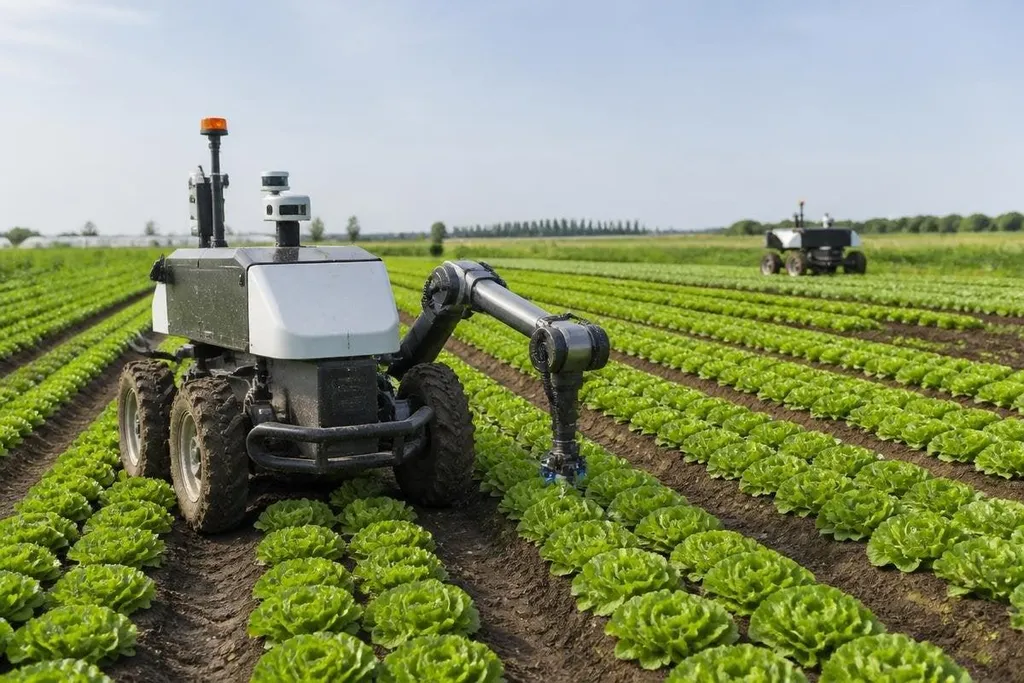
A farm robot can move through a field, but movement alone doesn't tell it which plant needs attention. AI can help a robot read images, sort objects, and choose an action, though each claim still needs proof from a real farm.
- Cameras can sort plants from soil, but changing light can affect the result.
- Plant-by-plant work can cut waste, if the robot identifies crops correctly.
- Farm trials matter more than demos, because mud, dust, slopes, and weather change the task.
From fixed routes to plant-level decisions
A basic agricultural robot follows set paths or repeats a task at fixed points. An AI system can add a layer of judgment: it can compare a camera image with patterns in its software, then send a command to the robot's arm, sprayer, or wheels.
That process has several steps. The camera collects an image, software labels parts of it, and the robot turns that result into movement. A plant may be marked for inspection, a weed may be treated, or a damaged fruit may be left for a person to check.
The benefit depends on the task. Treating one plant at a time could reduce the amount of spray used across a field. Picking only ripe fruit could reduce handling, but the robot still needs a gripper that can hold the crop without damage.
The farm makes vision difficult
AI works from patterns in its training data. A field rarely presents the same pattern twice. Sun angle changes through the day, leaves overlap, soil can hide stems, and dust can cover a camera lens.
Those conditions matter because a wrong label becomes a wrong action. A robot that mistakes a crop for a weed may remove the plant a grower wanted to keep. A system that misses a weed may leave the job unfinished.
The machine also has to move safely. Uneven ground can change the camera angle, while rain can affect traction and image quality. A farm robot needs more than image software; it needs sensors, control software, and a way to stop when its view is uncertain.
Where AI can help first
The clearest uses are tasks where the robot can inspect a small area and act on a narrow decision. Crop monitoring, weed detection, fruit sorting, and damage checks fit that pattern when the system has a clear target and a person can review doubtful results.
The work still needs a measured result. A maker should report how many plants the robot saw, how often it made the right call, how many errors needed human correction, and how the system behaved under different weather conditions.
A farm operator comparing field trials can use agricultural robotics coverage from Robot24.com to check the named robot, crop, test date, and weather conditions behind each result. The remaining issue is which AI claims still lack field proof.
What remains unproven
AI does not remove the hard parts of farm robotics. Power, repairs, transport between rows, safe operation near people, and seasonal changes still shape the cost of the job.
A small test area can also hide problems. A robot may work well on one crop variety, in one soil type, or under one lighting setup. That result doesn't show how it will perform across a full growing season.
I’d judge an agricultural robot by its error rate and repair record before its AI label.
A useful report should state what the robot could not do. If it needed a clear view of every plant, say so.
If a person checked each decision, include that labor. If the trial stopped before harvest, the result should be treated as an early test rather than a finished farm system.
A buyer's field checklist
Use these questions before paying for an AI-based farm robot:
- Name the task: What decision does the software make, and what action follows?
- Check the test site: Did the trial cover the crop, soil, slope, and weather you face?
- Count the errors: How many crops, weeds, or objects did the robot label incorrectly?
- Price human checks: Who reviews uncertain images, and how much time does that take?
- Plan for service: What happens when a camera, wheel, arm, or computer fails?
- Ask for limits: Which parts of the job still need a person?
AI can give agricultural robots more room to make decisions, but the farm remains the test. The next useful number is not a model's AI score; it's the number of correct decisions made per hectare, across a full season.